
Aim
Once we have a project set up and the team lined up we are ready to kick off! The kick off is the team’s opportunity to:
- align on the aims of the project and the methodology
- agree how you’ll work together as a team
- create a shared understanding about what you are working on, why and how the work will be accomplished
Investing a couple of hours to do this properly, including touching on the people elements, will pay dividends over the duration of the project.
Who
The kick off should only include members of the delivery team. This isn’t a stakeholder event, it’s for the team on the ground to get to grips with the work and how they will deliver it.
When
The kick off should be held just before you start delivery, ideally within a few days of the first sprint. It will typically last around two hours. It’s a good idea to assign a note taker to capture key points and actions that can be shared with attendees following the meeting.
What
We have created a template agenda to help you get started. Some of the typical elements of a kick off include:
- Introductions – this ensures everyone knows who everyone else is and what role they will be doing on the project
- Icebreaker – sometimes we need to break the ice, we like ice breakers such as “What’s your favourite thing to have from Gregg’s?” or “Tell us something we wouldn’t know from your CV”
- Context for the project – it’s good to get everyone on the same page by sharing the context for this work, and any important work that has led to this point
- Project overview – this is an opportunity to share the approach and methodology, talking through the project plan so everyone is clear on how we expect the project to go. It’s important to discuss as a group what is in scope and equally what’s out of scope tp prevent any scope creep or delay that might impact delivery.
- Ways of working – we need to agree how we’re going to work together, including what tools we want to use, time and frequency of for example stand ups and how we manage other the other rhythms and rituals ; central store for managing project information and documents
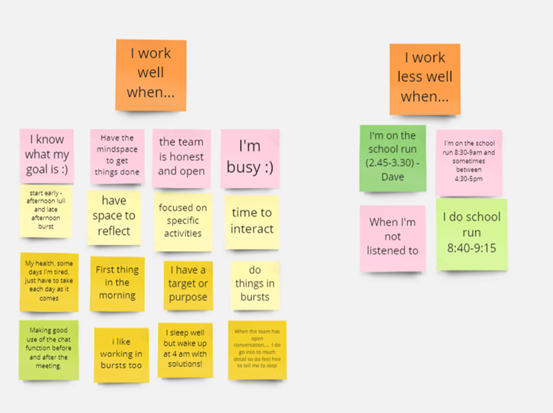
- I work well when, I work less well when – this is a nice exercise that builds understanding between team members. Take a few minutes and ask team members to document (on Miro or post its on a wall) how they would finish these two sentences. Spend some time reviewing these together as a team, allowing each person to talk through their contributions. This is a good time to raise if you have a particular working pattern, or you need to do the school run or anything else that would be good for your team to know about you
- Next steps – you will need to agree any actions or next steps to take you up to your first sprint planning session.
You might also want to include additional elements into your kick off, or you may want to hold a follow up session to cover these off:
- Stakeholder mapping and project communications – it’s important to understand all the different stakeholders that needs to be looped in at different stages of the project and their role and responsibilities. Creating a RACI could be one of the actions here to support this and ensure effective project communications.
- Risk mapping
- Agreeing project governance